|
"Patients only care about how their teeth look."
It's one of the most common frustrations I hear from dentists - particularly those who've been in the profession long enough to remember when patients came in concerned about their health first, and their appearance second.
But here's the thing: that frustration, while understandable, is built on a misread.
Patients haven't become more shallow. They've become more honest.
When a patient sits in your chair and asks about whitening, or veneers, or straightening - they're not being vain. They're telling you something real. Cosmetics is emotional shorthand. It's the language people use when what they actually mean is: "I want to feel more confident." Or: "I want to belong." Or simply: "I want to feel better about myself when I look in the mirror."
Health, on the other hand, is abstract. It lives in the future. It's about avoiding something - decay, disease, deterioration - none of which feel urgent when nothing hurts today.
Cosmetics is felt immediately. It's personal. It's motivating.
So rather than fighting it, use it.
The most effective clinicians I know don't try to steer patients away from cosmetic concerns and toward health. They do something far more powerful - they connect the two. They use the cosmetic conversation as the gateway to something deeper: helping the patient own their own biology.
When a patient wants whiter teeth, that's your invitation. Not to lecture them about periodontal disease, but to show them how their whole mouth tells a story - and how taking ownership of that story changes everything.
Health and aesthetics aren't opposites. In the right hands, one leads naturally to the other.
The question isn't: "How do I get patients to care about health?"
The question is: "How do I meet them where they already care - and take them somewhere meaningful?"
That's not selling. That's communication. And it changes everything.
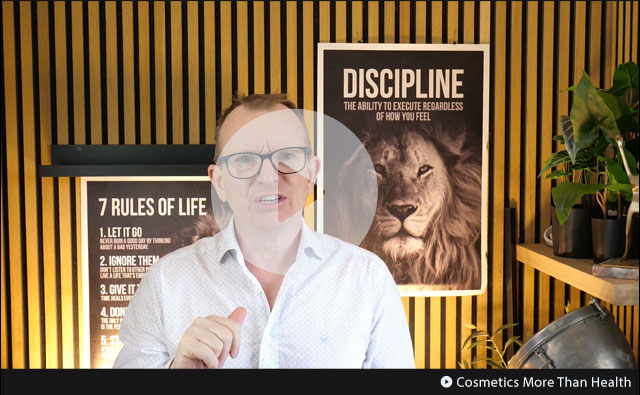
I’ve recorded a short video breaking this down:

If it resonates, you can join me in Sydney on May 23rd where I’ll show you how to apply this in a practical, real-world way in your own practice:

This is the difference between talking about treatment...
...and helping patients truly want it.
But start with the video.
It might completely change how you think about patient decisions.
See you soon,
Barry
|