
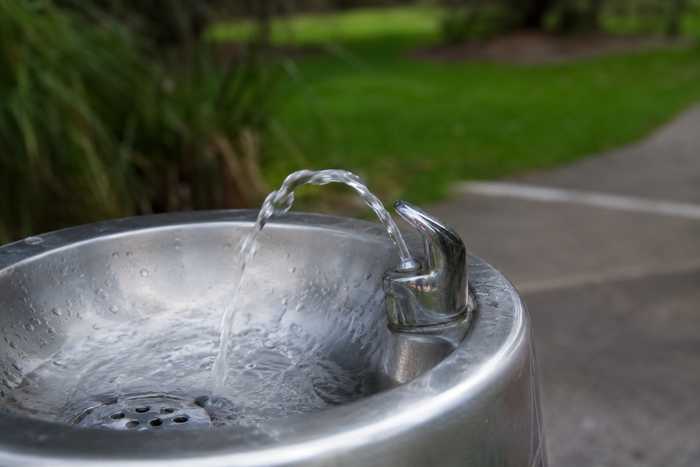
The Australian Dental Association has taken the case for water fluoridation to talkback radio after the National Health and Medical Research Council (NHMRC) announced it would review the evidence.
NHMRC acting CEO Prue Torrance told a Senate hearing in Canberra in October that the council would “undertake a comprehensive review of the available evidence at this time and look to see what has emerged.”
She was responding to South Australian Liberal Senator Alex Antic, who asked whether fluoridated water remained safe for pregnant women in light of research he claimed linked fluoride to “adverse neurodivergent outcomes” in children.
ADA Vice President Dr Angie Nilsson, Clinical Director, Oral Health, at the Northern NSW Local Health District, responded on 2GB’s nationally syndicated Afternoons with Michael McLaren.
“All health professionals will go by the evidence, and there is a huge amount of evidence to show that fluoride in the water helps populations to reduce tooth decay ... in Australia, there’s one in four kids with untreated tooth decay, one in three adults with untreated tooth decay; it’s a measure that we know works,” she said.
Dr Nilsson said the review was a matter of good scientific practice.
“The reason that it’s happening is not so much because of the apprehension for people; [rather] because it’s good science to review every evidence-based advice for population measure. It just adds to the body of evidence,” she said.
She said some parts of NSW, including Byron Bay and Nimbin, were far more sceptical of fluoridation, and that is where she works.
IQ concerns
On concerns about IQ and neurodevelopment, Dr Nilsson pointed to an Australian population-based longitudinal study that found no adverse associations. She said people in Australia were “really safe”, given natural water here does not have a high fluoride content.
Without fluoridated water, she said, the most vulnerable, including people in remote communities at higher risk of decay, would be left with nothing, as supplements and tablets are no longer recommended and bottled water with fluoride is not available. She cited reductions in children’s tooth decay in Townsville and Tasmania, where water has long been fluoridated.
Asked whether brushing twice a day was enough, Dr Nilsson compared fluoridation to a seat belt that protects everyone in the car, not just the wearer.
“So, it’s about making a decision as an individual is one thing, but making a decision for a whole population is another,” she said.
Water fluoridation in Australia began in Beaconsfield, Tasmania, in 1953. Hesitancy and misinformation were a major topic at the recent 2026 National Fluoride Guidelines Update workshop hosted by the University of Queensland’s Population Oral Health unit, which Dr Nilsson and ADA Oral Health Promoter Dr Monica Farrelly attended.